Showing posts with label RABWAL. Show all posts

Monday, April 14, 2008

A Place To Read A Book And Write A Letter: London

This weekend past I took my last flight until the flight home, and I took that flight to London. Traveling under the guise of Dr. Donald Trumbo, I went to London to visit my friend Mary Kate the Actress, who was in the British American Drama Academy, or BADA. I love acronyms.

Wednesday, Thursday and Friday were the culmination of the semester for BADA, where, instead of finals, students acted in plays. I caught the Comedy of Errors on Thursday, which is a Shakespeare play about two sets of identical twins, so basically I didn't catch anything, and then Mariana Pineda on Friday, which is a play about a Spanish patriot's execution, so, you can guess how that ended.

Mary Kate was billed as Lucia/First Novice in Mariana Pineda, and for her performance I awarded her Baller Status, which is usually an award I reserve for great science fiction but which I also give out when I feel so moved by particularly deep emotions or beautiful people.

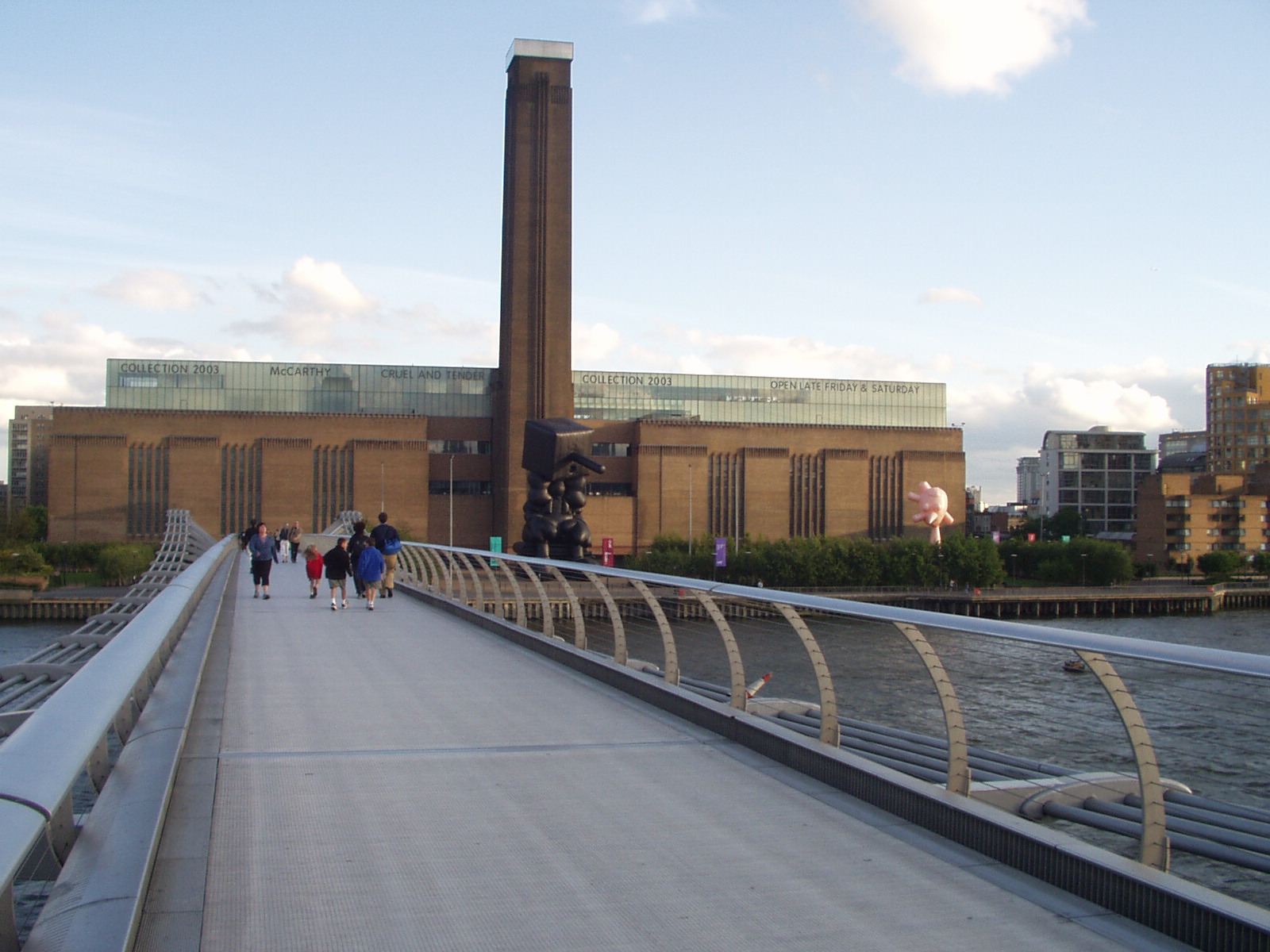
It was in London that I recently became cultured. On Friday, I went first to the National Gallery, and then to the Tate Modern. It seems like London has art up one side and down the other (wherever those sides actually are, I don't know); the National Gallery contains the great works of the world, whatever that means, and the Tate Modern in its turn has the great works of the modern era. I know what that means. It means a small guild of artists went into the Tate Modern, put on blindfolds, and started throwing paint around. It was in the Tate Modern that I, for the first time, left an exhibit in actual fear. Things in the Tate can get out of hand, pretty quickly.

The National Gallery, by the way, contains many paintings from Picasso's Blue Period. I can only hope that when I die, people will anthologize my writings and label one section of my life the Shenanigans Period, where I could not stop using the word "shenanigans."

I spent a lot of time in Hyde Park, on the suggestion of Douglas Adams. "Let's not mince words," Adams wrote, "Hyde Park is stunning." Spot on, Adams. I had planned out an entire day of activities, but ended up scrapping a good deal of it in favor of remaining in Hyde Park. One of the big differences in Rome and London is the space. Rome is extremely compact, and comes off as a Hollywood caricature of a big cities, with big roads that look like alleyways and no actual alleyways at all. London, however, loves its open space, and has alleyways aplenty. Hype Park, as well as other parks scattered across the city, are a testament to how much space they love. It's like a two way mirror, that from the outside looking in the city can see the park, but from the inside out the Park doesn't register the city. Love it.

I went to Westminister Abbey only to see the Poet's Corner, where all the great English figures of art are buried. Yes, Westminister is huge and gilded and a masterpiece, but by this time I have had it up to here, and though you cannot see it I am pointing to a point a little below my left ear, with architecture, so I get to pick and choose what I process as a tourist. So I saw the tombs of Shakespeare, Edmund Spencer, John Milton, et cetera (et cetera in this case encompasses Chaucer, T.S. Eliot, and others) and got repremanded for photographing the tomb of Dickens.

On Saturday, Mary Kate took me to Henry V. This requires a new post, because what I have to say on Henry V cannot possibly be shoehorned into this airport bookstore travel log.

P.S. Spending the night in an airport is a bad idea. Sometimes it is necessary, as if your flight leaves at seven, thus you have to be there at five, but then you have to leave the city at four, et cetera, but if you can avoid it, do, because the reason all benches in all airports have armrests is to prevent people from taking a good night's sleep.

Monday, March 31, 2008

A Place To Read A Book And Write A Letter: Venice

This weekend the whole Arkansas in Rome program took a field trip to Venice, the city of salt water and the ever present feeling that one is sinking. There are small roads in Venice, but all mass transport takes place on water - no wheels for rolling or for steering, only fins and helms. All cars are parked and left outside the city, on the mainland. Not even a Vespa is permitted.

Venice was built on a marsh, which seems to happen a lot with old major cities - which is ironic, given what a bad idea that seems to be. Settlers fitted wooden poles into the mud of the ocean floor, waited for a spell, then started building on top of said wood. After learning this, the whole of the time I spent in Venice was accompanied by a small minor fear in the backwoods of my brain that said that I was about to bear witness to a second Atlantis, and that maybe in another three thousand years people with say that Venice was just a myth, and that Cass Trumbo was just a legend - truly, no one could ever be that handsome and smart. Certainly no one could ever run as fast as they say he could.

One thing I found interesting was the patron saint of Venice, St. Mark. In the beginning of the city, there was another, lesser saint tasked with divine protection. Once the power of the Venetians grew, they decided they deserved a higher ranking saint, possibly one who was on Jesus's T5, and so they sailed off into the sunset and stole St. Mark's body from Alexandria. When asked about this turn of events, St. Mark had no comment.

Our eccentric professor Emilio led us through the smaller streets of Venice, touring buildings and making up stories about his lost loves. Not once, but twice did he feign an attempt to commit suicide over fictional affairs, trying to climb over railings and jump into the ocean before his students could hold him back. In the end, though, no one was harmed. Though I did see a Penn State student jump off one of the two bridges spanning the Grand Canal, landing in the water twenty feet below. When asked if I was next, I said I'd jump for a dollar and good moral support. However, no American dollars were to be had, and no support was to be found.

Abstract art is on the opposite end of the spectrum from understanding. Venice is one of the three places in the world with a Guggenheim Collection, which is apparently a big deal. I didn't know. I went there by myself, which was a very bad decision - I think the Guggenheim took a piece of my soul. I spent about an hour wandering aimlessly, unable to form any sort of plan for seeing the entire museum, nor to assess the meaning of various works, so assailed by the forces of surrealism was I, that I was driven to abstraction (which is much worse than being driven to distraction).

The Guggenheim is staffed almost entirely by young people, earning pennies on internships from around the world; and I say around the world, but most were from English speaking countries. Heavily discouraged by the surrounding art, I turned to talking to the staff, and managed to strike out with the British answer to the strawberry blonde.

ME: What do you make of it?
SB: I believe it's Picasso's The Studio.
ME: Oh. I thought it was a rocket ship.
SB: Well, that's obviously his self portrait, and that's obviously a figure of a woman.
ME: Yeah, you see, I figured that was a square, and that there was a circle, but beyond that I was lost.
SB: Then you are an idiot.

And you might say, no one could either be that rude or know that little about Picasso, but if I'm lying I'm dying.

Sunday, March 9, 2008

A Place To Read A Book And Write A Letter: Caffe Greco

As my trip to Lyon was thwarted by the high altitude powers of travel, I committed to carry out my travel plans here in Rome. I was taking a Hemingway novel and a notebook to France in order to truly read a book and write a few letters. As it happened, this can actually be done in Rome. And to think I had been traveling untold hours and trespassing against untold horrors to do this elsewhere!

I took a tip from a travel book and took a left, going north (these two directions do not always correlate with one another; be wary of such broad generalizations) towards the Spanish Steps, and eventually went into the Caffe Greco. The Caffe Greco, as it announces upon your entrance, is 248 years old - it was founded in 1760. Since then, it has been the swank haven of writers like Byron, Keats, and, yes, Hemingway, but really, was there a bar in Europe Hemingway didn't visit? The place was so overrunning with literary depression that an Italian named Giorgio De Chirico said it was the cafe where you sit and await the end. Writers are the most depressing people on the face and body of all planets, truly.

The cafe is one long hallway connecting several parlors, creating the biggest coffee shop I have ever been in. And it was filled to the rafters. The tables were marble topped and the chairs were wood and velvet, and there wasn't a free specimen of either, except in the hallway, where I sat. The walls changed color in each room, but were unified by a antique motif running throughout; the walls looked as if they hadn't been repainted since the Great War. Not that you could really see them, they were so covered with knick-knacks. Painting and scrapes of paper plastered the walls, from all the artists who had passed through them. The decorations even spilled over into sections usually deemed unfit for decor - door frames and crown moulding, too, held up portraits and even collector's plates. Ghosts of great minds drank coffee beside me; for myself, this was a sort of pilgrimage.

Sadly, the Caffe Greco has, for lack of a fancier term, sold out. The Spanish Steps are now home to Prada, Gucci, and the like, and I am almost certain they do not turn a profit, so steep are their prices. But shoppers flood the streets in a depressing way, and most people end up getting fleeced by men selling purses or watches on the sidewalks. Those who filled the Caffe Greco to the rafters were not poor writers but Japanese and American tourists, attracted by the aura. This wouldn't be so bad, if the Caffe Greco hadn't given in, but it sold it's soul, to the tune of six euros a cappuccino (which, by the way, is over six times the cost of a cup anywhere else).

Adding insult to injury, a further saddening me about the state of things in general, was Hemingway. Raise your hand if you knew Hemingway was so depressing? Well, that makes just you. I can't really say what I expected, personally, but I know that I did not expect life to be so terrible. I am going to rethink living for a little.

Or at least I was, until I went home and watched Pushing Daisies. I tell you truly, that show is all the fables and fairy tales that mankind has, run through a strainer of happiness. It could cheer up even Hemingway, if it caught him off guard.

Thursday, February 28, 2008

A Place To Read A Book And Write A Letter: Siena

From Florence, we took an hour's bus ride across Italy to Siena. Siena had their Tuscan posteriors handed to them with an almost insulting air of superiority by the Medici, the ruling family of Florence, back in the day. Florence decided they liked the color scheme, and took it. That's good business.

Siena is probably best known for its annual horse race; there are no horses when we visit, but there is an unsettling vexation with porcelain horses. I do not buy any.

As with most old cities, Siena orbits its Duomo; this church is a tad more interesting. Not in an architectural way; I'll be the first to tell you I can't tell apses from Adam when it comes to talking about architecture. I think architects have a unique ability to define undefinable things, with words like "rustification" and "plasticity." The catch here is they never tell anyone outside their club what those definitions are. However, this Duomo is interesting for something else. It's a skeleton - or at least half of it is. There is a finished church, but there's also two enormous walls that mark the best laid plans of Renaissance masons which never bore fruit. The money was appropriated before the project reached completion; now, one wall is a museum, and the other is a sort of lookout point for tourists.

The front of the remaining Duomo is covered by gargoyles and biblical equivalents of action figures. These are all duplicates, though. The originals were long ago put into the museum in the wall, having been destroyed by pollution. Their hands and noses gnawed away by the human leprosy, they traded places with look alikes and stunt doubles. The original stained glass window, too, was replaced, but unlike the original statues, it retained its dignity in the museum; it was placed at the end of a dark tunnel, where people can still see it as it was meant.

Most Roman towns operate by rules of mathematics, originating from something called a decumanus, as the homework I copied last night said. From atop that second wall, the lookout wall, it is easily seen that Siena is not like that. Siena is a snake, abandoning hope of a human order for something more organic. While the town orbits the Duomo, the streets grow like roots out of the Campo.

The Campo is a beautiful field of bricks, desperately wanting a frisbee. I could kick myself for not bringing one; I'm not a big advocate of the frisbee, but some situations simply demand it. The floor is slanted towards the main civic building, from which emanate eight silver stone streaks, dividing the Campo into nines; each section is dalmation doted with pockets of tourists, including Adella and Jane, two girls from the Czech Republic. American charm is in high demand over there.

(The italics denote the generic eastern bloc accent I put on during our conversation; I do this unintentionally but uncontrollably. They didn't mention it.)

Confetti in the cracks of the bricks bespoke of a swank celebration, and indeed, the girls tell me there was recently a wedding in the Campo. I don't have to say that in all the places I visit, I don't always read a book and write a letter. I didn't in Siena. Not doing so, in such a place as that open space, will probably go on my Top Five Regrets of the Semester.

Tuesday, February 26, 2008

A Place To Read A Book And Write A Letter: Florence

Florence is usually identified as the city of the Renaissance; in fact, it was the city that won back all the English after the Catholic Church scared them off. The imposition of romanticism (whatever that means; I got it from a book) was so strong on Florence that in 1966, when it was flooded with heavy levels of mud (which, in sepia, looks a lot like dark chocolate), the entire world created a committee to fund it's restoration, and international youths descended upon the city to wipe clean all the manuscripts and etchings available.

Naturally, as a program, this could not be passed up. So the entire class took a weekend field trip to Florence, headed by our professor Emilio, a six shooter long ago loaded with art history. What's this Emilio? Bam! Michelangelo! And this? Bam! Brunelleschi! Who - Bam! Donatello! Bam! Audrey Hepburn! Bam! Bam! Bam!

(And yes, Audrey Hepburn did come up, as Emilio compared her merits to Julie Andrews for the good part of a half hour. No surprise, Audrey won.)

The dominating figure in the townscape is the Duomo, flanked by a separate Baptistry. The Dome is advertised to have 463 steps. This time, they are right. The climb to the top is measured in intervals, and at the halfway point tourists are afforded a chance to exit onto the catwalk, right underneath the final judgement frescoes; far away, the Last Judgement looks old and outdated. Up close, however, it literally scared my socks off (I later found my socks on the floor of the cathedral, having dropped six stories down. But here's the kicker: my shoes stayed on my feet the whole time. How in the world does that happen?).

The Baptistry is famous for its golden doors, solid metal doors that, in 1966, were swept away by mud and replaced with imitations, for insurance purposes, I suppose. Less known about the Baptistry is that it was the very chapel in which Dante himself was baptized.

Florence was the city that gave Dante the boot, by the way. His home turf threw him out and told him to, and I quote, "keep the change, you filthy animal" (that's a rough translation of his Inferno). From there he was forced to wander Italy, like the show Kung Fu, except without the use of martial arts. Or anything remotely similar. So it's not like it at all.

There is a Dante museum in Florence, fashioned out of his old house, but it sucks - and rightly so. I would expect nothing more than a large collection of Wikipedia entries, pasted to the walls in an elementary way, from the city which banished him (which, coincidentally, is how the museum goes).

Florence also is the home and shelter of Michelangelo's David, whom everyone has seen in pictures. A picture is of him, though, is not worth moon rocks on Mars. Seeing him in person was an overpowering experience. I like to think that he forced his way into the canon of art by his sheer size.

Our hotel had an English language CNN. I fell asleep bingeing in the news of the world.

Tuesday, February 19, 2008

A Place To Ride A Bike And Hang Ten With Dante Alighieri: Ravenna

From Bologna, from the hostel which moonlighted as a mouth of hell, our group took a train an hour sideways to the town of Ravenna. Ravenna had its glory when the Byzantine Empire declared it a sort of new capital for the West. This, of course, did not last, but it was a nice thought.

Ravenna takes the pedestrianism (if you use a fake word in two separate posts, it becomes a real word, as by the wand of The Blue Fairy) of Bologna to a new level: the center of the city, the historical section, is sealed off from cars, and is for foot traffic only. And bikes. The great attraction of Ravenna, which was unknown before we arrived, is that the tourist office rents bikes for free. I was all over that. The six of us formed a gang named the Yellow Jackets, and road from church to Byzantine church disturbing the peace and studying mosaics. We would have broken bread on some fools, if said fools gave us the opportunity.

The bike I rode was in its prime. Yes, it did have a basket and a bell. And no, it didn't have gears. Or the type of brakes you can still buy. I called her The Gilded Mongoose. In order to prove my personal bad attitude, I often rode The Gilded Mongoose standing on the seat, without a helmet. And when old ladies gave me a hard time for being so reckless, the Yellow Jackets let 'em have it. In a breaking bread sense. Which in itself is a phrase that doesn't really exist, but, like pedestrianism, I'm trying to force into vernacular.

Ravenna is the final resting place of Dante Alighieri, that one writer who penned that group of books, the Divine Comedy. There's nothing divinely funny about them, if you ask me. Just the story of how a few people screwed up. However, in Ravenna they make a big deal out of him. Kicked out of Florence early on, he spent most of his time in Rome, but gave the last three years of his life, along with all his remaining bones, to Ravenna. There he is entombed, as well as carved into stone. He has his own museum there, too; it was sadly closed. When asked at what point the museum would reopen, meaning at what hour, the proprietor replied, two or three years. I was not about to wait that long, even for Dante.

Being declared the beacon of Byzantium in the old Roman landscape was kind of a big deal, so for a stretch Ravenna was showered with money, and from this money churches sprang up like dandelions, which I have recently discovered are a type of weed. Imagine that! But, yes, churches like dandelions; the most interesting church by far was the Basilica di San Vitale. The church is a rotund one, a circle surmounted by a dome, which is a rare shape in Italy (I am told). The only light comes from the stained glass windows, and bounces off the mosaics the Byzantines are so famous for, creating what the architecture students called, "a heavenly light." It was spectacular in the sense of the root word, spectacle. It was like a stage drama, watching light bounce this way and that, then those ways and these.

But the river card? Saint Vitale probably never existed. The church was named after a non-existent saint. If that isn't something else, then everything in this world is the same.

Monday, February 18, 2008

A Place To Read A Book And Write A Letter: Bologna

This weekend, five of us, four architecture students and one crazy person, took a train three hours (3 hrs) north to Bologna. Bologna is known as the fat city, and is purported to have wonderful food. I wouldn't know, because my group was turned away from three restaurants for want of reservation. No room at this inn. Try the stables.

The city itself is a marvel of pedestrianism, and I'm pretty sure that's not a word, but the city is a marvel of pedestrianism just the same. It has over forty kilometers (40 km) of porticos, which is something the architecture students said to make me feel stupid. But I know their game. Porticos are just a fancy word for covered sidewalks. It was at this point that I rebuttaled with pedestrianism. But, yes, forty kilometers of covered sidewalks lining assorted boutiques, which are quite expensive, FYI. I came away with only a three (3) euro tie, to add to my ever growing collection of men's wear (it is really fun to dress up, no?).

These sidewalks all converge in a main piazza, crowned with what was supposed to be a magnificent church. This church took three hundred years to arrive in an unfinished state; the Church in Rome put a stop to construction when they learned the Bolognese church's plans had it rivaling St. Paul's size. It's kind of funny, the logic people use.

Bologna is also home to the fourth tallest tower in Europe, which I don't think is that big of a deal. If the world was the Olympics, this building wouldn't even medal. It claims to have five hundred steps (500). I count four hundred and eighty seven (487). Twice (2x).

We finished our day chasing buses around in a most aggravating fashion. I made the mistake of picking a hostel that was outside the city center. In my defense, Bologna had only one hostel, that was actually two separate hostels, but I digress. The point is, headquartering a few kilometers (2, 3, 4, etc. km) outside the walls was a bad idea, for several reasons. One, we had to make a series of well timed buses to complete the objective. Change buses to phone booths and you have the plot to Die Hard 3: With A Vengeance. Change buses to jumps and you have the choreography to all the fight sequences in Ong Bak: Thai Warrior. So that night was pretty much an action movie where we failed to fulfill our dramatic need. We ended up taking a taxi, driven by a man who was simultaneously watching the italian version of the O.C. The guy doing Sandy Cohen was amazing.

The other reason the hostel was a bad idea: it was where they filmed the movie Hostel. The four hostels I stayed in previously had been smash hits, and had restored my faith in student traveling. In this hostel, I locked my door and plugged my ears. I think there was some sort of backpacker pagan ritual performance in the halls. The next morning, all the blood had been cleaned from the floor, but there were chicken feathers everywhere. We left as soon as checkout began.

Saturday, February 9, 2008

A Place To Read A Book And Write A Letter: Orvieto

For just the day, I took a train an hour north of Rome to the town of Orvieto. I have been to a lot of towns on hills, and on cliffs, but this is the first town I have ever been to where an elevator is needed to reach it. Seriously. You exit the train station and step onto a gondola/elevator combination that speeds you to the top like a dyslexic man taking the bar exam, which is to say, at a slow pace.

Orvieto is a medieval town centered around its duomo, which is just a fancy word for big church. This church is colored like a zebra; stripes cut it into horizontal strips, and alternate from black stone to white stone and back again. The interior is empty, minus the collection of columns. It is layman beautiful, beautiful in the way baroque forgot.

I spent most of the day at the Porta Rocca, which is the fortress turned garden. It takes up a position on the edge of the cliff, looking out over the hills of Umbria, which is not the same thing as Umbra, a character in the video game Morrowind. If you too had trouble making that distinction, I sympathize with you. Like I said, I spent most of my time there. I had some editing to do, so I sat on a bench and watched the sun pull its weight from east to west.

And this would have been an idyllic end of my journey, had it not been for my notebook. I had planned to take the 5:30 train out of town. Indeed, I even boarded. As the bell went off, signaling the train's departure from the station, I checked my bag and found that my notebook had escaped when I wasn't looking. Without any time to spare, I ran to the front of the car, and exited in a dramatic fashion. You know those movies where men jump from moving vehicles, only to crash and somersault on the pavement? Yeah, that happened.

EDITOR'S NOTE: This is not the fifty five euro notebook that cause Cass to jump from the moving train. He risked his live, nay, his very soul, for a notebook purchased at Wal-Mart for ten cents, American.

So I had to wait two more hours for the next train. I rode the elevator a few more times. I finally settled in a cafe which had an entire wall devoted to the many chocolates of the world. Can you imagine? I don't have to; I was there, silly. I bought a bar made in Genova. It was delicious, as well as positively expensive. I made my notebook pay for it. It was his fault, anyway.

Tuesday, February 5, 2008

A Place To Read A Book And Write A Letter (And Ski): Interlaken

The story I told about my birthday, English teachers would say it began in media res, which is Latin for, 'the writer has no idea what he's doing.' They would say such because it began right smack in the middle, like an art film. And since I'm rather artsy, I thought it fitting to end with the beginning.

On Thursday we flew to Basel from Rome. Basel is a border town, a Swiss town right next to Germany. They speak Swiss-German, which is neither Swiss nor German, nor is it Italian, which is the language I kept trying to communicate in. If anything, my trip to Switzerland made me realize how good at Italian I really was, as I would repeated order in Italian from Swiss waiters. Needless to say, this made me very popular.

On Friday, we made a small detour to Germany to survey a factory that makes modern chairs (you think I'm kidding; this was the architecture students' idea of fun), and then took one o'clock train directly to Interlaken.

Means between the lakes, Interlaken does. Beautiful in the way that you only use once or twice in your life. I settled in the low key hostel (I was continuously told that Balmer's Herberge, the most popular hostel, was 'where the party's at.' I declined), rented some skis, then bonded with my Korean roommates. Lots of Koreans in Interlaken, and no idea why. It's known as a stop for young backpackers, but the reason why there were so many Koreans there escapes me. And the kicker is, I don't think they ever left the hostel.

Skiing in the Alps is a lot different than in Colorado or in front of Pomfret. At least where I was, there were no trees. Ski paths were marked by poles, every ten or so yards. Poles were colored to show difficulty. Obeying the poles was not necessary.

The day I skied, my birthday, a great storm, the hand of God, descended on the mountain and blinded all the skiers like it confused all those who built the Tower of Babel. So, to review: no visibility, no trees, markers placed just out of sight of each other, and everybody else speaks Swiss-German. I had a fun ride down. When I got to the bottom, I think I was bleeding lactic acid. On the mountain, though, I did have a science fiction revelation. Went back to the hostel and wrote it out.

When Ben Rector turned twenty, he wrote a hit pop song. When Cass Trumbo turned twenty, he wrote a short story about aliens. It's up in the air as to which is a better gauge of manhood.

Sunday, January 27, 2008

A Place To Read A Book And Write A Letter: Ravello

After Pompeii, I took a train to Salerno; Salerno's a port city, an industrial city, and thus not a tourist destination. It can be used, however, as a jumping off point for prettier, less productive costal towns. The main pedestrian walkway is wide and looks like a lower class Spanish Steps, with less people. The rest of the city smells like fish. Good hostel, though: it runs flush with a church, and at night the choir might sing you to sleep.
In the morning I took a bus to Amalfi, a popular costal town, then to Ravello, on the cliff above. The road from Salerno to Amalfi was like a basketball hoop: you are positive only one ball can fit at a time, but, sure enough, two basketballs can barely slide by, side by side. The road from Amalfi to Ravello, though, was like a small plant pot, into which two basketballs are being forced. Exciting.

Ravello is kind of famous for its villas. Up on the cliff, old people (as in people of old) built first the Villa Rufolo, then the Villa Cimbrone, looking out over the Mediterranian Sea. I walked the Villa Rufolo first. It was purchased and renovated by a Scottish botanist a century or two ago, and is known for its gardens. Even in the winter, these gardens were beautiful. I can only imagine (or look at pictures on the internet; see above) how it looks in the spring. Upside to visiting in January: there's none else here. How it looks in the spring is filled with hordes of ignorant tourists. Not at all like myself. Rufolo is now owned by the Rufolo Foundation, which is a great advocate of Richard Wagner's music. Apparently, he called Rufolo the physical representation of his music (I know what you're thinking, cause I thought it too; no, he's not the same guy who was in Hart to Hart).

Villa Cimbrone is probably three times as big. It didn't have any flowers, not yet, but it did have extensive walking ways, and a lot of statues; it reminded me a lot of Pemberly. I ended up sitting on a bench at the edge of the property, overlooking the sea, AGAIN (are you serious? I mean, enough is enough, Mediterranian), and hung out with a statue I named Steve for a couple hours. Good man, that Steve. Fun Fact of the Day: Greta Garbo, 1930's starlet, eloped in the Villa Cimbrone.

Monday, January 21, 2008

A Place To Read A Book And Write A Letter: Assisi

I have found that people come to Italy for many different reasons: the architecture, the fashion, the wine, the lawlessness, et cetera, et cetera. (are you supposed to use two et cetera's?). I can only look at architecture so long before I realize it's all the same; I've never been one for fashion and I'm not yet one for wine, and although I do enjoy a good, no-holds brawl time and again, I have not yet really capitalized on the unpatroled dark side streets.

I have read a lot. And I have written a whole lot of letters. So I suppose that the reason I came to Italy was to find a pretty place to read a book and write a letter (I actually came to study, but, you know, et cetera, et cetera). And so this weekend I began my research.

Virginia, Emily, and I left Perugia for Assisi on Friday. Assisi is a small town built on a hill, most famous for spawning some sort of animal rights activist for all I can tell; I can't read latin. But I can tell you that if that was what my town was famous for, I wouldn't advertise it.

None of the streets go straight. They all double back, making little headway against the elevation. We took a bus all the way to the top, and then (in all seriousness) we illegally entered the ruins of a castle and I scaled one of the ramparts. Then I ripped my shirt and answered the Call of the Wild. And only one part of that story is true. Which? YOU decide.

From the illegally entered ruins we could see the whole town: it's all made out of the same white and pink stone, which makes it look like one big Franciscan compound. A deep fog rolled in from my right (that's the best I can do, in terms of cardinal directions), like a high tide. The city looks like what Perugia used to: clean, green, and open. No graffiti, et cetera, et cetera.

Going down is easy: the streets are all sloped. The hard part is figuring where you are, as all these streets are lined with multi-use buildings, and covered in the type of fog that causes shipwrecks. It all added to the ambiance, I think. Or at least it added to my definition of ambiance, because I'm still not sure what it is, exactly.

Overall, I award it 1300 moose, which is David Fish's equivalent of a gold star. And I operate on the David Fish standard.